← All 100 K-Drama Words Ch 2 · Social Air & Interpersonal Chemistry
WORD #031 OF 100

바람맞다

Baram-matda [ba-ram-mat-da]
Literal Nuance: Stood up; left exposed to cold wind
Core Korean Meaning: To be stood up for a date or appointment, carrying the poetic nuance of being left exposed and alone, as if hit by a cold wind.
바람맞다 (Baram-matda) — Cultural Illustration from The Soul of Korean
Plate #031 · Visual Mind-Map for 바람맞다 (Baram-matda) from The Soul of Korean
1. In Korean Cinema & Drama

The K-Drama Moment

“카페에서 2시간째 상대방을 기다리다 연락 끊겼을 때의 쓸쓸함”
A heartbroken protagonist sits alone in a bustling cafe, phone clutched tight, as the realization dawns that their date isn't coming. With a heavy sigh, they whisper, '나... 바람맞았어.'

Imagine this: A dimly lit cafe, rain streaks down the windowpane. You’ve been waiting for two hours, coffee long cold, the empty chair opposite a stark reminder. Your phone, once buzzing, now silent. A tear escapes as you whisper, '나... 바람맞았어.' It’s the quintessential K-drama moment of heartbreak and profound loneliness.

2. Cultural Roots & Somatic Etymology

Where “바람맞다 (Baram-matda)” Comes From

This poignant phrase, 바람맞다, literally means 'to be hit by the wind.' Think of being left out, exposed to a sudden, chilling gust. It’s not just about absence; it’s the visceral sensation of being left vulnerable, forgotten, and utterly alone.

3. Subtitle Distortion vs. Korean Reality

Why English Subtitles Fail to Capture “바람맞다”

While English has 'to be stood up,' it feels almost too blunt. 'Stood up' describes the action. 바람맞다, however, captures the feeling of the one left behind – the quiet despair, the chill in your soul, the sense of being buffeted by an invisible force. It’s a poetic lament.
OFFICIAL BOOK & AUDIO COMPANION

Unlock the Native Speaking Guide & 100-Track Audio Player

The situational native conversation guide, real-life Korean dialogue examples, and native Seoul voice audio commentary (86s narrated track) for 바람맞다 (Baram-matda) are exclusively included in the official eBook edition.

4. How to Use It Like a Native (Situational Dialogue Guide) Speaking Guide in eBook
So, when should you use this melancholic phrase? The next time a friend genuinely bails, don’t just say 'they cancelled.' Instead, with a dramatic sigh and a slight pout, tell your Korean friends, '나 오늘 바람맞았어.' They’ll instantly understand your sorrow, perhaps even offering a comforting bowl of tteokbokki. [Full Situational Dialogue, Intonation & Social Nuance Guide in Book]
Bonus: 100-Track Native Audio Player (Track #031 · 86s) Included Inside Book
Every copy of The Soul of Korean on Google Play Books includes the private companion link to stream authentic native Korean pronunciation and narrated commentary for all 100 words on your phone or PC.
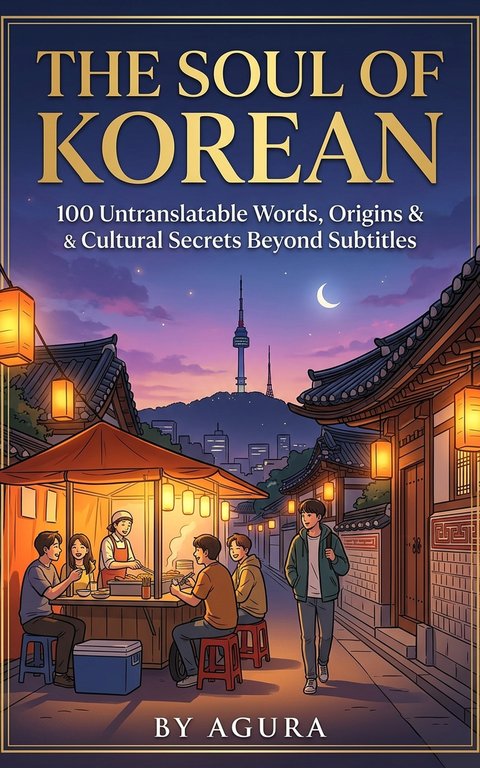
The Soul of Korean Cover
THE SOUL OF KOREAN
100 Untranslatable Words · 100 Full-Color Plates · Private Audio Player Access
Get the Official Book + Audio Player on Google Play Books →
Chapter 2 · Social Air & Interpersonal Chemistry

More Untranslatable Korean Words in This Chapter

Browse All 100 Korean Expressions →