주전부리

The K-Drama Moment
“떡볶이, 붕어빵처럼 입이 심심해서 틈틈이 찾아 먹는 소소한 간식”In 'Reply 1988,' Deok-sun and her friends, after a long school day, gather around a street vendor, one exclaiming, '우리 주전부리나 할까?' as they eye steaming tteokbokki and fish cakes, their faces beaming with simple joy.
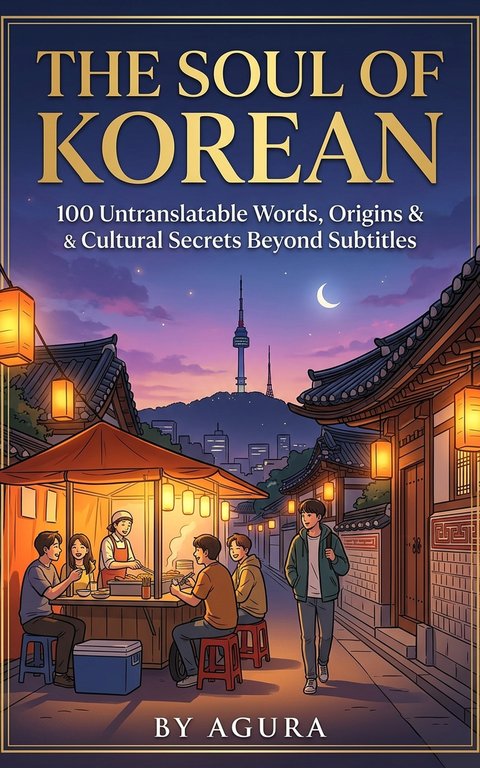
Imagine a chilly Seoul evening. In a beloved K-drama like 'Reply 1988,' Deok-sun and her friends, after a long school day, gather around a street vendor. One of them, eyes sparkling at the sight of steaming tteokbokki, exclaims, '우리 주전부리나 할까?' as they eagerly anticipate the simple joy of shared street food.
Where “주전부리 (Jujeonburi)” Comes From
This delightful word literally means 'money for small treats.' '주전' originally referred to money for alcohol, but evolved to mean funds for any small indulgence, while '부리다' means to 'manage' or 'play with.' At its core, it’s about satisfying a '심심한 입' (sim-sim-han ip) – a 'bored mouth' – rather than true hunger, a playful craving for comforting bites.
Why English Subtitles Fail to Capture “주전부리”
While English has 'snack' or 'munchies,' *Jujeonburi* is far more nuanced. It’s not just any food between meals; it’s a specific, often social ritual of seeking out beloved street foods like tteokbokki or bungeoppang that define Korean street culture. It’s less about sustenance, more about shared pleasure, lightheartedness, and cultural connection.